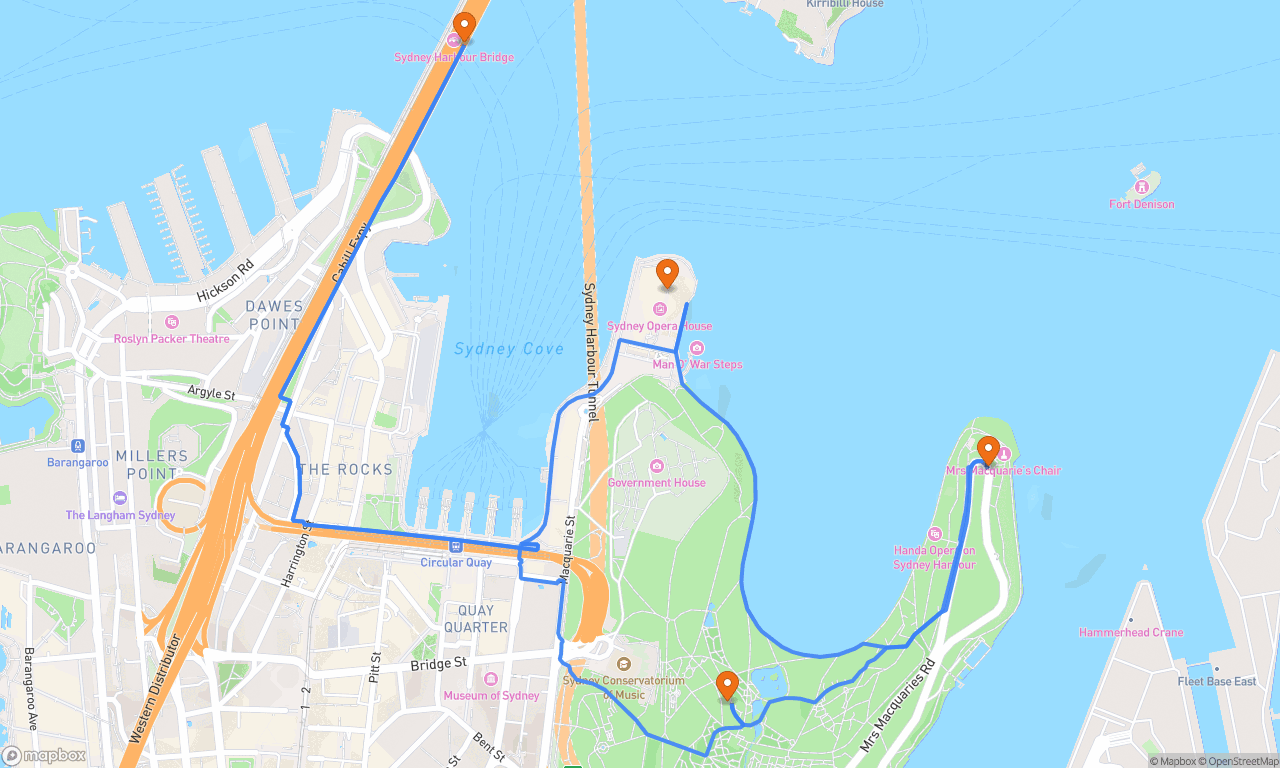
Start by deciding what kind of run this is
The biggest mistake on a short travel run is trying to optimize everything at once. You want sightseeing, a clean workout, safety, neighborhood coverage, and a photo stop, all within a tight window. That usually produces a route that is technically possible but awkward to run.
Instead, choose one primary objective before you leave your hotel. Is this run mainly for exploration, easy aerobic miles or a serious training run? Once that's clear, route decisions become simpler. You can reject detours that look interesting but break the rhythm of the run or you can embrace the chaos.
For most travelers, the best default is a hybrid: an easy run with two or three memorable landmarks. That gives you enough structure to feel purposeful while still making the route feel like a local experience rather than a treadmill replacement.
Plan for decision load, not just distance
Two 45-minute routes can feel completely different even if they cover the same distance. The difference is usually decision load: how often you need to check your phone, interpret intersections, or recover after a wrong turn.
In practice, decision-heavy routes feel longer and slower because they interrupt your breathing rhythm and mental flow. Every pause or glance at the map adds friction. If you are traveling, that friction compounds because the streets are unfamiliar and your confidence is lower than usual.
This is why we usually recommend a simple opening segment. The first 8 to 12 minutes should help you settle into pace, orient yourself, and build confidence before the route asks for more attention. Waterfronts, parks, broad avenues, and obvious loops work well here.
What to check before you head out
- Look for the first landmark or route anchor you can reach without multiple quick turns.
- Check where the route becomes busy, narrow, or intersection-heavy and decide if that tradeoff is worth it.
- Make sure the final 10 minutes bring you back cleanly instead of forcing an improvised sprint to your destination.
- Pick landmarks that are visible while moving, not places that require a full stop to appreciate.
A route that scores well on these checks will usually feel better than a route with more “must-see” stops but poor flow.
Space the payoff across the run
On a short run, landmark timing matters as much as landmark selection. If you front-load all the interesting sights in the first ten minutes, the second half can feel like a commute back to the hotel. If you push everything to the end, the route may feel flat until the finish.
A simple pattern works well: start with an easy orientation segment, hit one visual payoff in the first third, another in the middle, and save the strongest view or neighborhood transition for the final third. This creates a sense of momentum without turning the run into a stop-start tour.
We use this “story arc” idea heavily in Shoerism route planning. Runners remember not only what they saw, but when they saw it. A good route has a sequence, not just a list.
A practical 45-minute route template
If you are planning quickly and do not want to overthink it, use this template as a starting point:
- Minutes 0-10: easy orientation segment with low decision load and clear footing.
- Minutes 10-20: first landmark or scenic section that confirms the route was worth choosing.
- Minutes 20-35: steady middle section with one route anchor (park loop, river path, major avenue, or bridge).
- Minutes 35-45: clean return with a final visual payoff and obvious finish point.
You can adapt this to recovery runs, business-travel mornings, or weekend city explorations. The point is not strict timing. The point is to protect flow and reduce uncertainty so the run still feels good when time is tight.
Why this matters for Shoerism
Shoerism exists because many runners already know how to train, but still lose time to route planning when they are in a new city. A good running route is not just a GPX line. It is a sequence of decisions, cues, and landmarks that should feel natural at running pace.
The product work follows the same principle as this post: reduce friction, preserve rhythm, and make the route memorable. That means clearer route intent, better landmark timing, and fewer moments where you have to stop to figure out what happens next.
If you are traveling soon, try this framework on your next short run. Even without the app, planning for flow first will usually give you a better experience than chasing every landmark on the map.